


 Zornitsa Stefanova
 Zornitsa Stefanova is a Financial Research and Platform Testing Analyst at BestBrokers.com, specialising in hands-on reviews of forex, cryptocurrency and stock trading platforms. She evaluates brokerage companies from a user-focused perspective, testing key areas such as account setup, trading conditions, platform usability, available markets and overall reliability.
 | Expert Editor
  Eugene Lee, CFA
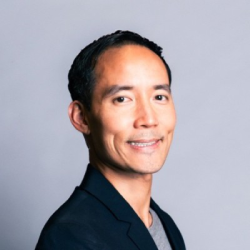 Eugene Lee, CFA, is the Head of Research at BestBrokers.com, where he draws on more than two decades of experience in global markets, portfolio management, derivatives, and fintech to evaluate online brokers. His background in institutional investing and quantitative research helps ensure that broker reviews are based on data, risk assessment, and real-world trading conditions.
  | Updated:
 The Seychelles has emerged as a popular hub for setting up a brokerage business due to the country’s lenient regulatory framework, business-friendly tax environment, and lower minimum capital requirements. Nearly 200 brokers have obtained licenses from the Financial Services Authority of Seychelles (FSA), which can make broker selection difficult for beginner traders. This article covers 9 brokers regulated in the Seychelles.
 Fusion Markets74-89% of retail's CFD accounts lose money
 BlackBull MarketsTrading leveraged products is risky
 Capital.com69% of retail investor accounts lose money when trading CFDs with this provider.
 IC Markets70.64% of retail investor accounts lose money when trading CFDs with this provider.
 Admirals73% of retail investor accounts lose money
 Tickmill70% of retail investor accounts lose money
 Trade Nation82.3% of retail investor accounts lose money when trading CFDs with this provider.
 Plus500 USThis content applies only to Plus500 US and clients from the United States. Trading futures involves the risk of loss.
 eToro52% of retail investor accounts lose money
Comprehensive Comparison of the Top 9 FSA-Regulated Forex Brokers
| FSA Forex Broker | Trading Platforms | Max Leverage | Our Score | License № |
|---|---|---|---|---|
| 1. Fusion Markets | MetaTrader 4, MetaTrader 5, cTrader, DupliTrade, Fusion+ Copy Trading, TradingView | 1:500 | 4.38 ⭐ | SD096 |
| 2. BlackBull Markets | MetaTrader 4, MetaTrader 5, TradingView, cTrader, MT WebTrader, BlackBull Shares, BlackBull CopyTrader, BlackBull Trade, BlackBull Invest, ZuluTrade | 1:500 | 4.28 ⭐ | SD045 |
| 3. Capital.com | MetaTrader 4, MetaTrader 5, TradingView | 1:200 | 4.06 ⭐ | SD101 |
| 4. IC Markets | MetaTrader 4, MetaTrader 5, cTrader, ZuluTrade | 1:500 | 4 ⭐ | SD018 |
| 5. Admirals | MetaTrader 4, MetaTrader 5, WebTrader, MT Supreme Edition, StereoTrader | 1:1000 | 3.99 ⭐ | SD073 |
| 6. Tickmill | MT4, MT5, WebTrader, ZuluTrade, TradingView | 1:1000 | 3.88 ⭐ | SD008 |
| 7. Trade Nation | TN Trader, MetaTrader 4, TradeCopier, TradingView | 1:500 | 3.86 ⭐ | SD150 |
| 8. Plus500 | Proprietary desktop and mobile platforms | 1:300 | 3.56 ⭐ | SD039 |
| 9. eToro | eToro Investing, eToro App, TradingView, eToro CopyTrader, proprietary platform | 1:400 | 3.24 ⭐ | SD076 |
Top 9 FSA-Regulated Brokers
Fusion Markets was founded in 2019. The broker offers low trading costs, tight spreads, and no minimum account requirements for both Zero and Classic accounts. The company is listed in the Financial Services Authority of Seychelles (FSA) register of regulated entities under license number SD096.
To test the broker, we opened a live Zero account at the FSA-regulated entity and connected it to MT4, starting with an initial balance of $1,500. Most supported payment methods require a minimum transfer of $10. The account charged a round-turn commission of $4.50 on forex and precious metals positions. In terms of average spreads, our team recorded 0.01 pips on EUR/USD, 10.3 pips on XAU/USD, and 3 pips on the US500 index.
Retail leverage is capped at 1:500 for major forex pairs, energies, and metals, 1:100 for indices and soft commodities, 1:20 for stocks, and 1:10 for cryptocurrencies. Exotic currency pairs also max out at 1:20. If your margin level drops to 90%, you trigger a margin call. At a 20% margin level, MT4 automatically initiates a stop-out to liquidate losing positions and prevent further losses.
The Seychelles license as an authorized securities dealer enables Fusion Markets to operate in most regions worldwide, although customers from Russia, Japan, New Zealand, Ontario, Spain, and the US cannot register live trading accounts at the time of writing. Retail traders at Fusion Markets can leverage their positions at maximum ratios of 1:500. Only clients registered through the broker’s entity regulated by the Australian Securities and Investments Commission (ASIC) receive negative balance protection.
Our compliance check confirmed that client funds are kept separate from the broker’s operational capital and held securely in segregated trust accounts with the National Australia Bank (NAB).
Gleneagle Asset Management Limited (ABN 29 103 162 278) trading as Fusion Markets, is the issuer of the Fusion Markets Products described in this communication. Trading in Fusion Markets Products involves the potential for profit as well as the risk of loss which may vastly exceed the amount of your initial deposit and is not suitable for all investors. You should read all of these Financial Product Service Terms, the Product Disclosure Statement (PDS) and the Financial Services Guide (available on our website) carefully, consider your own financial situation, needs and objectives for investing in these Fusion Markets Products and obtain independent financial advice.BlackBull Markets is a Seychelles-authorized broker offering trading on over 26,000 financial instruments. The broker is based in New Zealand but serves international clients with an FSA license (SD045) granted to its parent company, BBG Limited. The company’s Seychelles entity operates from offices based on Mahé Island. The broker maintains anti-money laundering (AML) and combating the financing of terrorism (CFT) policies and stores customer funds in segregated accounts at New Zealand’s ANZ Bank.
Our team selected an ECN Prime account and linked it to MT4 for testing purposes. We noted that while the broker enforces no minimum deposit limits, most available payment methods require at least $50 per transaction. Funding is completely free, but withdrawals attract a $5 fee across all supported banking solutions.
The broker offers retail, institutional, and swap-free accounts. Registered customers can connect their BlackBull live accounts to MT4, MT5, cTrader, or TradingView. The broker has also developed a proprietary platform (BlackBull Copy Trader) designed for copy traders. The Seychelles-authorized entity caps maximum retail leverage at 1:500.
We confirmed that the 1:500 maximum applies to forex, gold, and silver, while copper is limited to 1:10. Other leverage caps include 1:100 for crude oil, heating oil, cryptocurrencies, and cash indices like US500, 1:50 for natural gas, 1:20 for index futures, 1:10 for soft commodities, and 1:5 for stocks.
In live trading, we paid a $6 round-turn commission per lot, with average spreads of 0.2 pips on EUR/USD, 12 pips on gold, and 6 pips on the US500 index, widening to 9 pips on US500 futures. Negative balance protection is offered in practice but not formally guaranteed under FSA regulation. Margin is monitored automatically, with margin calls at 75% and a 50% stop-out level.
Trading foreign exchange on margin carries a high level of risk and may not be suitable for all investors. The high degree of leverage can work against you as well as for you. Before deciding to trade foreign exchange, you should carefully consider your investment objectives, level of experience, and risk appetite. The possibility exists that you could sustain a loss of some or all of your initial investment and, therefore, you should not invest money you cannot afford to lose. You should make yourself aware of all the risks associated with foreign exchange trading and seek advice from an independent financial advisor if you have any questions or concerns as to how a loss would affect your lifestyle.- 3. Capital.com
Capital.com launched its retail offering in 2016 and provides over 5,500 markets, affordable pricing, and transparent trading conditions. The London-based broking firm has obtained regulatory approval from five financial regulators, including the FSA. Its Seychelles entity has registered offices in Mahé and operates under securities dealer license number SD101.
We tested the broker by opening a retail account connected to MT4. The minimum deposit is low at $10, although it varies by funding method. Bank wire transfers, for example, require a minimum deposit of $50.
Our testing assessed execution quality and costs under a spread-only, commission-free model. Deposits and withdrawals carried no internal fees, but a 0.7% currency conversion charge applies at spot rates. During active hours, spreads averaged 0.7 pips on EUR/USD, 50 pips on gold, and 18 pips on the US500.
The offshore entity offers leverage of up to 1:200 on major forex pairs, indices, and gold, and 1:20 on higher-risk assets such as stocks and cryptocurrencies. If account equity falls below 100% of the margin requirement, the broker issues a margin call, while hitting 50% triggers an automatic stop-out. Our retail account was also protected against negative balances.
The broker provides access to over 140 forex pairs, 5,100+ stocks, commodities, cryptocurrencies, and 40+ index markets. Customers can trade via two third-party platforms, MetaTrader 4 and TradingView. Traders can access the Education section, which includes guides on different financial instruments.
CFDs are complex instruments and come with a high risk of losing money rapidly due to leverage. 69% of retail investor accounts lose money when trading CFDs with this provider. You should consider whether you understand how CFDs work and whether you can afford to take the high risk of losing your money. Please refer to our Risk Disclosure Statement. - 4. IC Markets
Launched in 2007, IC Markets offers low fees and competitive conditions for forex trading. The company serves international customers with a securities dealer license from the FSA (SD018) and has registered offices on Eden Island. The FSA-registered entity of the company is Raw Trading Ltd. Clients can trade over 2,800 financial instruments, including more than 60 currency pairs, indices, commodities, and stocks.
We evaluated the Seychelles entity using a live Raw Spread account linked to MT4, which had no specified minimum entry requirement. In practice, most deposit methods enable instant transactions except for international bank transfers, which take 2 to 5 business days. The data we captured showed average spreads of 0.06 pips on EUR/USD, 19 pips on XAU/USD, and 3.6 pips on US500. We incurred a $7 round-turn commission, but this drops to $6 per standard lot with Raw Spread cTrader accounts.
The Seychelles license enables IC Markets to facilitate trades in most countries worldwide, although customers from Canada, New Zealand, Israel, Iran, and the USA are not accepted. Traders registering through the FSA-regulated entity can access leverage of up to 1:1000 and raw spreads from zero pips with Raw Spread accounts. The broker reports execution speeds of less than 40 milliseconds.
Client funds are held in segregated accounts in line with the Securities Act and the Securities (Conduct of Business) Regulations, although negative balance protection is not provided. Leverage reaches up to 1:2000 on metals, 1:500 on energies and crypto, 1:200 on indices, bonds, and futures, and 1:20 on stocks. Leverage is applied via a tiered margin system. A 50% stop-out level is enforced to limit losses.
CFDs are complex instruments and come with a high risk of losing money rapidly due to leverage. 70.64% of retail investor accounts lose money when trading CFDs with this provider. You should consider whether you understand how CFDs work and whether you can afford to take the high risk of losing your money. - 5. Admirals
Founded in 2001, Admirals offers services for traders seeking security, price transparency, and fast order execution. The company has received authorization from the FSA and appears in the regulator’s register under license number SD073 as a securities dealer.
The Seychelles entity operates as Admirals SC Ltd and has registered offices on Mahé Island. As a regulated entity, Admirals provides negative balance protection for margin accounts. Clients must notify customer support by email within two business days if their balance falls below zero.
Retail clients also benefit from segregated funds and insurance coverage of up to $100,000 per claimant. Trades are routed through regulated liquidity providers, supporting market integrity and reliable execution. Admirals offers more than 2,500 trading instruments, including 80+ forex pairs, 25 exchange-traded funds, 12 equity indices, and over 500 stocks.
We reviewed Admirals using a Zero MT4 account under its FSA-regulated entity, which required a $25 minimum deposit. Deposits were free, but only one withdrawal per month was free, with later withdrawals incurring a 3% fee. Forex and metals trades carried a $6 round-turn commission, while average spreads stood at 0.1 pips on EUR/USD, 40 pips on gold, and 3 pips on the US500.
Clients of the FSA-regulated entity can access leverage of up to 1:1000. This applies to forex positions below $300,000 but falls to 1:25 above $3 million. Leverage is capped at 1:500 for gold, oil, and major indices such as the US500, 1:200 for FRA40 and SPA35, 1:100 for silver, copper, and BTC/USD, 1:50 for natural gas, and 1:20 for stocks and ETFs.
CFDs are complex instruments and come with a high risk of losing money rapidly due to leverage. 73% of retail investor accounts lose money when trading CFDs with this provider. You should consider whether you understand how CFDs work and whether you can afford to take the high risk of losing your money. - 6. Tickmill
In operation since 2014, Tickmill offers over 600 tradable symbols available through CFDs. The broker holds a license from the FSA (SD008) as a securities dealer and has offices in Mahé’s Mont Fleuri district. Its parent company has obtained licenses from four other regulatory bodies, including the Cyprus Securities and Exchange Commission (CySEC), the Financial Conduct Authority (FCA), the Dubai Financial Services Authority (DFSA), and the Financial Sector Conduct Authority (FSCA).
Our team evaluated Tickmill’s trading conditions with a Raw MT4 account, where a minimum deposit of $100 applied. We deposited with a bank transfer and noted that the broker covers the processing fees on bank wire deposits of $5,000 or more up to $100. However, we had to provide a copy of our bank statement as proof to get reimbursed.
The broker provides affordable fees, fast order processing, and a broad range of tools for market analysis. Customers of Tickmill Seychelles Limited can access leverage of up to 1:1000. This ceiling applies to forex and gold, but the caps drop to 1:200 for major cryptocurrencies like Bitcoin and Ripple, 1:100 for Brent crude oil, 1:50 for copper and natural gas, 1:20 for stocks and ETFs, and 1:10 for other commodities. Trading conditions were generally favorable. We incurred a $6 round-turn commission per lot and traded with average spreads of 0.1 pips on EUR/USD, 9 pips on XAU/USD, and 3.9 pips on the US500.
The broker is adequately capitalized and adheres to client funds segregation policies. Each client is eligible for negative balance protection and compensation between $20,000 and $1 million via Tickmill’s investment insurance scheme, established in partnership with Lloyd’s.
CFDs are complex instruments and come with a high risk of losing money rapidly due to leverage. 70% of retail investor accounts lose money when trading CFDs with Tickmill Europe Ltd. You should consider whether you understand how CFDs work and whether you can afford to take the high risk of losing your money. - 7. Trade Nation
Previously known as Core Spreads, Trade Nation is a broker with operations in multiple jurisdictions, including the UK, South Africa, and the Seychelles, where its entity, Trade Nation Financial Markets Ltd., holds securities dealer license number SD150. The broker focuses on low-cost trading conditions for its customers.
Trade Nation uses a spread-only pricing model, which we confirmed with a live MT4 account, where minimum deposits started from $1. Minimums can vary by payment method and country. The platform also supports guaranteed stop-loss orders as an added risk control. Trading is commission-free, with spreads from 1.1 pips on EUR/USD, 103 pips on gold, and 2.5 pips on the US500 during our tests.
The FSA-regulated entity of Trade Nation offers negative balance protection to retail margin traders, allowing them to leverage their positions at maximum rates of 1:500 for forex, silver, and gold. Major indices like US500 and energies are capped at 1:200 and 1:50, respectively. Trade Nation segregates client funds from its operating capital and stores them at Absa Bank, one of the largest commercial banks in the island country.
Financial Spread Trades and CFDs are complex instruments and come with a high risk of losing money rapidly due to leverage. 86% of retail investor accounts lose money when trading CFDs with this provider. You should consider whether you understand how CFDs work and whether you can afford to take the high risk of losing your money. - 8. Plus500
Plus500 is a securities dealer regulated by the FSA, operating under license number SD039 from Victoria, the capital of Seychelles, since 2020. The broker caters to customers with 2,800+ contracts for difference (CFDs) on financial instruments, including forex, stocks, commodities, options, indices, and crypto. The FSA-regulated entity of Plus500, Plus500SEY Ltd., offers maximum leverage of 1:300 to retail customers.
We checked leverage caps across all asset classes and found that forex pairs can be traded with leverage of up to 1:300, while limits are lower elsewhere. Retail clients can access up to 1:250 for commodities, 1:150 for indices, 1:100 for ETFs, 1:20 for individual shares, and 1:5 for cryptocurrencies and options.
The broker offers fast execution, competitive spreads, and commission-free trading. Client funds are held in segregated accounts, and automated margin calls help prevent negative balances on leveraged accounts. During testing, we confirmed that losses are limited to the available account balance and that client funds are not used for hedging or operational purposes.
As Plus500 does not support third-party platforms, we tested its proprietary web and mobile apps through a retail account. The minimum deposit was $100, with instant card payments and no internal deposit or withdrawal fees. Under the broker’s spread-only pricing model, we recorded average spreads of 0.9 pips on EUR/USD, 74 pips on gold, and 7 pips on the US500.
*This information is not relevant to EU residents who are to be serviced by EU subsidiaries of the Plus500 Group, such as Plus500CY Ltd, authorized by CySEC (Reg. 250/14). Different regulatory requirements apply in Europe, such as leverage limitations and bonus restrictions.
79% of retail investor accounts lose money when trading CFDs with this provider. You should consider whether you can afford to take the high risk of losing your money. - 9. eToro
Founded in 2007, eToro serves clients from more than 140 countries and has registered offices in multiple jurisdictions, including the Seychelles, Cyprus, Abu Dhabi, New Jersey, and Australia. The company’s Seychelles entity operates as a securities dealer under license number SD076, from its offices in the capital city, Victoria.
Retail clients under eToro’s FSA-regulated entity can use leverage of 1:30 for major currency pairs and 1:20 for non-major pairs. Advanced leverage is capped at 1:400 for major forex pairs and 1:50 for minor and exotic pairs. Leverage reaches 1:100 for indices and commodities, including gold, 1:30 for cryptocurrencies, and 1:20 for individual equities and ETFs.
Traders can access over 10,000 instruments across forex, commodities, indices, crypto, stocks, and ETFs. All eToro Seychelles clients receive negative balance protection, while client funds are held in segregated accounts at tier-one institutions such as J.P. Morgan, UBS, Citi, Deutsche Bank, and Coutts Bank. Regulatory restrictions prevent the Seychelles subsidiary from serving customers in Europe, Hong Kong, Israel, Singapore, Switzerland, the UK, and the US.
Opening an account requires a $50 first-time deposit, while later minimums vary by country, reaching $2,000 for South Africa and Vietnam. Deposits incurred no extra charges, but withdrawals from USD-denominated investment accounts carried a $5 fee. We traded CFDs commission-free, recording average spreads of 1.1 pips on EUR/USD, 40 pips on gold, and 12 pips on the US500 index.
Leveraged and speculative products are not suitable for all investors, so users should consider their risk tolerance and capital at risk before taking on leverage.
CFDs are complex instruments and come with a high risk of losing money rapidly due to leverage. 52% of retail investor accounts lose money when trading CFDs with this provider. You should consider whether you understand how CFDs work, and whether you can afford to take the high risk of losing your money.









FSA Regulated Forex Brokers Ranked by Trustpilot Score
| Forex Broker | Trustpilot Reviews | |
|---|---|---|
| 1. Fusion Markets | 4,873 | 4.8 ⭐ |
| 2. IC Markets | 48,248 | 4.8 ⭐ |
| 3. BlackBull Markets | 2,681 | 4.8 ⭐ |
| 4. Capital.com | 13,311 | 4.6 ⭐ |
| 5. Trade Nation | 1,411 | 4.4 ⭐ |
| 6. eToro | 29,171 | 4.2 ⭐ |
| 7. Plus500 | 17,312 | 4.2 ⭐ |
| 8. Tickmill | 1,077 | 4.1 ⭐ |
| 9. Admirals | 2,046 | 3.8 ⭐ |
Financial Services Authority of Seychelles in Brief
The Financial Services Authority of Seychelles (FSA) was established in 2013 when the Financial Services Authority Act passed into law. The FSA is an independent regulatory entity that oversees non-bank financial institutions and services registered in the island country. It regulates all securities exchanges, clearing agencies, investment advisors, fiduciaries, insurance companies, and brokers operating within the Seychelles.
The FSA is governed by a Board of Directors, which serves as its principal governing body and is responsible for setting policy and overseeing operations. Board members are appointed by the President of Seychelles for fixed 3-year terms and include a mix of ex-officio representatives from key government ministries and appointed members from the public and private sectors.
The current Chairperson of the Board is Mr. Patrick Payet, who was re-appointed in January 2024. Mr. Randolf Samson, appointed in October 2022, is the CEO of the FSA, oversees its day-to-day operations, and serves as an ex-officio member of the Board. The FSA has several operational divisions, including Policy, Legal and Communications, Anti-Money Laundering/Countering the Financing of Terrorism (AML/CFT), and Risk Management, Insurance and Pension Supervision.
The FSA carries out several key functions, such as promoting the development of the local financial services industry, granting licenses and monitoring compliance with the law. The regulatory body can also submit recommendations on legislative amendments to the Seychelles Minister of Finance (Naadir Hassan at the time of publication).
The watchdog keeps an up-to-date register of all companies it oversees, allowing traders to confirm whether their chosen brokers hold Seychelles licenses. Navigate to the Securities Dealers tab for the full list of FSA-authorized broking firms.
Requirements for Obtaining an FSA Broker License
Online brokers must acquire securities dealer licenses from the FSA to operate legally within the Seychelles. Nearly 200 firms have already chosen this option since the country has a relatively lenient and business-friendly regulatory environment, with lower corporate tax rates, licensing costs, and capital requirements compared to other jurisdictions.
The process starts with submitting an application form, which brokers can download directly from the regulator’s website. Candidates must provide accurate information about their source of funds, overall capital, shareholders, compliance officers, and high-level executives. Companies applying for licenses must establish local offices in the Seychelles. Each applying broker must appoint at least two directors and two shareholders who are professionally suitable for their positions. Directors and other key personnel must have clean criminal records and adequate qualifications in the financial sector to gain approval.
Brokers seeking a Seychelles license must pay an application fee of $1,500. Approved candidates must also pay $3,000 in annual license fees. If all documents are in good order, candidates can anticipate a decision from the FSA within three months of submitting their applications. Submitting incomplete or inaccurate applications commonly results in delays and outright rejections. Application fees are non-refundable even if applications are rejected.
The Seychelles has considerably lower minimum capital requirements compared to other regulatory jurisdictions. Companies interested in acquiring securities dealer licenses must maintain capital of at least $50,000 throughout their operations in the country. Brokers must deposit this minimum amount in an account at an approved bank in the Seychelles.
Failure to deposit this minimum capital in time leads to rejected applications. Approved candidates must appoint FSA-approved auditors within one month of receiving their licenses. Licensees are subject to regular audits and must report their earnings to the Seychelles watchdog. All approved brokers must actively work to counter illegal activities such as money laundering and terrorist financing.
Investment advisors, both individual and corporate, must also obtain licenses from the local financial regulator, similar to online brokers. The application fees amount to $1,250 for individuals and $1,500 for corporate entities, with annual license fees of $2,500 and $3,000, respectively.
Below is a summarized list of all the steps forex brokers must complete during the license application process in the Seychelles:
- Application fees: Forex brokers submitting documents for an FSA license must pay an application fee of $1,500. Applicants must also pay a state fee of $6,300. Entities approved to operate under an FSA license must pay annual license fees of $3,000.
- Minimum capital requirements: To be eligible for an FSA license, brokerage companies must have minimum share capital of $50,000. The minimum capital requirements of other regulators can be twice as high and vary depending on the services offered.
- Application assessment timeframe: If the company has been fully compliant and has submitted all required documents, it usually takes up to three months for the regulator to review the application. However, any inaccuracy during the application process may lead to delays.
- Physical presence required: To apply for an FSA license, a broker must have a local office registered in the Seychelles. The financial services provider must also appoint a brokerage license representative, a regulatory compliance officer, and a legal advisor; all three must be located in the Seychelles.
- Key employees: The company needs to employ two directors and two shareholders, all of whom must be experienced, well-educated in their respective fields, and able to provide proof of professional standing. The applicant must also employ an auditor approved by the FSA, with the auditor appointed no later than one calendar month after the broker is licensed.
- Corporate tax rates: Forex brokers licensed by the FSA are required to pay a corporate tax of only 1.5%, with the rate calculated on the total income of the licensed entity.
- Client funds segregation: The FSA requires licensed brokers to cover operational costs using only funds in the company’s bank account. To enforce this, FSA-regulated brokers must keep their customers’ funds in segregated bank accounts.
- Investor protection scheme: While FSA-regulated brokers are not required to adopt a specific investor compensation scheme, most entities operating under an FSA license offer customers compensation in the case of insolvency.
- Leverage and risk management: FSA-regulated brokers can offer higher leverage with few restrictions, even to retail clients, compared to CySEC-regulated brokers that must cap retail leverage at 1:30.
- Negative balance protection: Generally, offering negative balance protection is not mandatory and depends on each broker’s policies.
- Other requirements: In addition to being registered in the Seychelles, applicants must also open a bank account with a local bank. This account is used to deposit the share capital required for the license application. Once licensed, the company conducts its financial operations through the same account.
Client Funds Protection at FSA-Regulated Brokers
The Seychelles financial regulator also has the responsibility of protecting consumers who do business with locally licensed entities. Brokers authorized in the country must segregate clients’ capital from their operational funds and store it in separate accounts at banks approved by the FSA. This requirement prevents firms facing financial challenges from using their customers’ money to cover working capital. It also helps ensure traders can retrieve their assets and deposits if a broker goes into liquidation.
The FSA makes no explicit provisions for negative balance protection, although many brokers regulated in the country have adopted this safeguard. If your live trading account balance falls below zero, negative balance protection is designed to prevent losses beyond your available equity. Brokers offering this measure enforce automatic close-outs on losing positions, preventing retail customers from incurring debt beyond their deposits.
Many FSA-regulated brokers also offer insurance coverage of client assets. If a broker fails to meet its financial obligations due to bankruptcy, eligible customers are entitled to compensation, though the maximum amounts are broker-specific. For example, Admirals’ Seychelles entity offers maximum insurance coverage of $100,000, whereas Tickmill has a ceiling of $1 million per claimant.
FAQs about FSA-Regulated Brokers
The FSA belongs to the category of tier-2 financial regulators, which means brokers licensed in the Seychelles are subject to less stringent regulations. Their clients will not benefit from the same high level of consumer protection characteristic for brokers licensed by tier-1 regulators like CySEC, ASIC, or FCA.
From what we gathered, the Seychelles financial watchdog imposes no concrete restrictions on retail leverage. Leverage caps are largely broker-specific. Some broking firms offer leverage as high as 1:1000, while others have lower caps of 1:500.
Spread betting is a legal and very popular activity among traders doing business with Seychelles brokers. If you seek to engage in spread betting, we can recommend trying Trade Nation or Capital.com, both of which support this service.
There is no shortage of cost-effective funding methods at FSA-regulated brokers where deposits generally incur no additional fees. The most common deposit options include credit and debit cards, bank wire transfers, checks, and online wallets like Skrill and Neteller. Some brokers like Fusion Markets have no minimum account requirements, allowing new customers to get started with any amount they feel comfortable with.
Each broker has different policies regarding account inactivity. Many of the firms on our toplist have waived their dormancy fees. With that in mind, we recommend you log into your live trading account occasionally just to be on the safe side.
You might also be interested in exploring forex brokers regulated by other institutions
- CySEC (Cyprus) Regulated Forex Brokers
- FCA (United Kingdom) Regulated Forex Brokers
- IFSC (Belize) Regulated Forex Brokers
- VFSC (Vanuatu) Regulated Forex Brokers
- ASIC (Australia) Regulated Forex Brokers
| Top 30 FSA-Regulated Forex Brokers Ranked by Trustpilot Score | ||||
|---|---|---|---|---|
| Broker | License Number | Trading Platform | Max Leverage | Trustpilot Score |
| Baxia | SD104 | MT5, MT4 | 1:1000 | 4.8 / 5 |
| Exness | SD025 | MT4, MT5 | 1:2000 | 4.7 / 5 |
| BDSwiss | SD047 | MT4, MT5 | 1:2000 | 4.7 / 5 |
| FXCentrum | SD055 | FXC Trader | 1:1000 | 4.6 / 5 |
| Taurex | SD092 | MT4, MT5 | 1:1000 | 4.6 / 5 |
| DB Investing | SD053 | MT5, Sirix WebTrader | 1:500 | 4.6 / 5 |
| FinPros | SD087 | MT5, FinPros Trading Platform | 1:500 | 4.5 / 5 |
| HFM | SD015 | MT4, MT5, HFM Platform | 1:2000 | 4.4 / 5 |
| Skilling | SD042 | Skilling Trader, MT4 | 1:500 | 4.4 / 5 |
| JustMarkets | SD088 | MT4, MT5 | 1:3000 | 4.4 / 5 |
| TenTrade | SD082 | MT5 | 1:500 | 4.4 / 5 |
| ThinkMarkets | SD060 | MT4, MT5, ThinkTrader | 1:500 | 4.3 / 5 |
| ETO Markets | SD062 | MT4, MT5 | 1:500 | 4.3 / 5 |
| Milton Prime | SD040 | MT4, MT5 | 1:500 | 4.3 / 5 |
| XS | SD089 | MT4, MT5 | 1:2000 | 4.3 / 5 |
| CMTrading | SD070 | MT4 | 1:200 | 4.2 / 5 |
| XB Prime | SD006 | MT4, MT5 | 1:500 | 4.2 / 5 |
| Exclusive Markets | SD031 | MT4 | 1:2000 | 4.2 / 5 |
| TopFX | SD037 | MT4, cTrader | 1:1000 | 4.1 / 5 |
| Errante | SD038 | MT4, MT5, cTrader | 1:500 | 4.1 / 5 |
| Purple Trading | SD041 | MT4, cTrader | 1:500 | 3.6 / 5 |
| Squared Financial | SD024 | MT4, MT5 | 1:500 | 3.4 / 5 |
| M4Markets | SD035 | MT4, MT5 | 1:1000 | 3.3 / 5 |
| Equiti | SD064 | MT4, MT5 | 1:500 | 3.3 / 5 |
| Alvexo | SD030 | Alvexo WebTrader | 1:400 | 3.1 / 5 |
| LeoPrime | SD032 | MT4 | 1:1000 | 3.1 / 5 |
| ATFX | SD093 | MT4 | 1:400 | 2.5 / 5 |
| FXGT | SD019 | MT4, MT5 | 1:1000 | 1.9 / 5 |
| FXOro | SD047 | MT4 | 1:400 | 1.7 / 5 |